

Local vs. National Payment Processors: What Wisconsin Business Owners Should Know
Local vs. National Payment Processors: What Wisconsin Business Owners Should Know
Every Wisconsin business that accepts cards has made this choice, whether deliberately or by default: process payments through a national brand you’ve seen advertised everywhere, or work with a local provider whose office you could actually drive to.
Most owners never made the decision consciously. The national processor came bundled with the POS system, or the bank suggested it at account opening, or it was simply the name they recognized. And to be fair — the national options work. Cards get accepted, money gets deposited.
But “it works” and “it’s working for you” are different things. Here’s an honest comparison of what you get — and give up — with each choice.
What National Processors Do Well
Credit where due. The large national and online-first processors got popular for real reasons:
Instant setup. Some let you start accepting payments the same day you sign up, with no conversation required. For a brand-new business testing an idea at a farmers market, that’s genuinely useful.
Simple, predictable pricing. One blended rate on everything is easy to understand, even if — as we cover in our guide to processing fees, funding times, and what to ask before you sign — simplicity usually means paying more than you need to on everyday transactions.
Polished software. The big platforms invest heavily in slick dashboards and app ecosystems.
If your business is very small, very new, or very simple, a national option can be a reasonable starting point. The problems tend to arrive later — as you grow, as your volume increases, and as the gap between a blended rate and your true costs widens month after month.
Where the Model Breaks Down
Support becomes a queue, not a relationship
The defining trade of the national model: you are one account among millions. When your terminal goes down during Saturday service, support means a chat window, a ticket number, or a hold queue — with a representative who has never seen your business and follows a script. Resolution is measured in business days. Your Saturday doesn’t have business days.
Nobody is accountable to you
National processors — especially the online-first ones — are known for algorithmic account decisions. A flagged transaction pattern can freeze your deposits with no warning and no human to appeal to. It’s rare, but when it happens, there is no one whose job is you. With a local provider, there’s a person whose reputation is attached to your outcome.
Pricing drifts, and no one is watching
Rates and fees tend to creep upward over time, announced in fine print. A national processor has no relationship incentive to flag that your pricing no longer fits your volume. A local partner who expects to see you at the chamber event, at the fish fry, or at your own counter has every incentive to keep your pricing defensible — because in Wisconsin, a reputation follows you.
One-size-fits-all rarely fits
A supper club, a salon, a contractor, and an online boutique have genuinely different processing needs — card-present vs. keyed, tipping, invoicing, seasonality. National platforms flatten those differences into one product. A local provider builds around how your business actually operates.
What “Local” Actually Gets You
A local payment processor isn’t just a smaller version of a national one. The model is structurally different:
A person, not a portal. You know your rep’s name. They’ve been to your location. When something breaks, you call someone who picks up — and if it can’t be fixed over the phone, they can show up.
Accountability you can enforce. A local company lives on referrals and reputation in a connected business community. That’s not a slogan; it’s an enforcement mechanism no contract clause can replicate. Here’s why a local merchant services provider is important.
Transparent pricing by necessity. Local providers win business by putting statements side by side with national competitors. That only works with pricing that survives scrutiny — which is why local providers tend to lead with transparent, interchange-plus style models rather than blended rates.
Advice that isn’t a script. Which POS fits your operation, whether a surcharge program makes sense, how to handle seasonal dips — a local partner answers based on your business, not a call-center flowchart.
Community stake. Your processor sponsoring the same little league your customers’ kids play in isn’t a business feature exactly — but it reflects a company whose success is tied to the same local economy yours is.
The Honest Decision Framework
Choose a national processor if: you’re brand new and testing, your volume is tiny, your needs are dead simple, and you value instant self-serve setup over support and cost optimization.
Choose a local processor if: card payments are a meaningful part of your revenue, downtime hurts, you want a human accountable for your account, and you’d rather have pricing you understand than pricing that’s merely simple.
For most established Wisconsin businesses — restaurants, salons, retail, trades, professional services — the second column describes reality. If you want a side-by-side approach to vetting options, see how to compare merchant services providers in Wisconsin. And if your business is scaling, here’s how payment solutions evolve as you move from local to national.
Frequently Asked Questions
Are local payment processors more expensive than national ones?
Usually the opposite for established businesses. National flat-rate pricing is built to cover the most expensive card types, so everyday transactions are often overpriced. Local providers competing on transparency typically pass through true costs plus a stated markup. The only way to know for your business is a side-by-side statement comparison — which local providers, including us, will do for free.
Can a local processor handle online payments and modern features?
Yes. Local providers work with the same card networks and modern technology platforms as national brands — the difference is the service layer, not the capabilities. Online payments, invoicing, mobile terminals, and integrated POS are all standard.
What happens if my local processor can’t fix a problem?
Reputable local providers are backed by established national processing infrastructure — the “local” part is the relationship, support, and pricing accountability on top of the same reliable rails everyone uses.
How do I compare my current processor against a local option?
Bring a recent statement to the local provider and ask for a line-by-line comparison. It takes little time, costs nothing, and either confirms your setup is fair or shows exactly where it isn’t.
Talk to a Local Wisconsin Team
Motus Financial is a Wisconsin payment processing company based in Sun Prairie, serving businesses across the state with local support, transparent pricing, and a team you can actually reach. Contact us for a free statement comparison — worst case, you learn your current deal is fine.
Motus Financial provides merchant services in Wisconsin — transparent pricing and local support for businesses statewide.





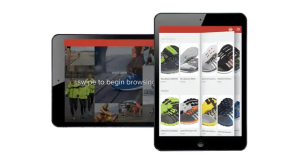
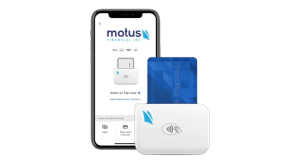
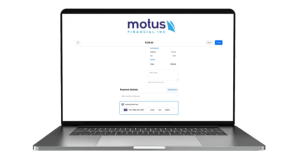
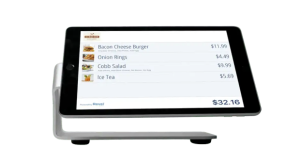 Our POS systems are designed to streamline in-store transactions. With features like inventory management, sales reporting, and customer tracking, our POS solutions help you run your business more efficiently. Our terminals are compatible with various payment methods, including chip cards, contactless payments, and mobile wallets.