
Interchange-Plus vs. Flat-Rate Pricing: Which Is Right for Your Business?
Interchange-Plus vs. Flat-Rate Pricing: Which Is Right for Your Business?
When you compare payment processors, you’re not really comparing companies — you’re comparing pricing models. And in practice, the choice usually comes down to two: flat-rate pricing, favored by the big national platforms, and interchange-plus pricing, favored by providers who compete on transparency.
Both models pay for the exact same thing: moving money from your customer’s card to your bank account. The difference is entirely in how the cost is packaged, how visible it is, and who benefits from the packaging. Here’s how each works, honestly stated, and a straightforward way to decide which fits your business.
(If you want the full breakdown of where processing fees come from in the first place — interchange, network assessments, and processor markup — start with our plain-English guide to processing fees and come back. This post assumes the short version: interchange and network costs are fixed for everyone; the processor’s markup is the only part that varies.)
How Flat-Rate Pricing Works
Flat-rate pricing charges you one blended rate on every transaction, regardless of what kind of card the customer used. Premium rewards card, basic debit card, business card — same rate. Sometimes there’s one rate for in-person payments and a higher one for online or keyed-in payments, but within each category, everything is flattened.
The appeal is real: your statement is short, your rate never surprises you, and you can predict costs on a napkin. There’s no fine print to decode.
The catch is structural: different cards genuinely cost different amounts to process. A basic debit card costs the processor far less than a premium rewards card. A flat rate has to be set high enough to keep the processor profitable on the expensive cards — which means every time a customer pays with a cheap card, the gap between the flat rate and the true cost is pure processor margin. (See how different card types impact your processing costs.)
Think of it like a restaurant charging one price for every entrée on the menu. Simple? Absolutely. But the price has to cover the ribeye — so everyone ordering the pasta is subsidizing it. If your customers order a lot of pasta (in payment terms: everyday debit cards, which are common in Wisconsin retail, restaurants, and service businesses), you’re the one doing the subsidizing.
How Interchange-Plus Pricing Works
Interchange-plus (sometimes called cost-plus or pass-through pricing) unbundles the cost. The actual interchange and network fees for each transaction are passed through to you at true cost, and the processor adds a clearly stated markup on top. The markup is the same on every transaction — what varies is the underlying card cost, which you now see instead of having it averaged away.
The appeal: total transparency. You can see exactly what the card networks charged and exactly what your processor earned. When your customers use inexpensive cards, you get the savings instead of the processor. Over time, for most established businesses, this model costs meaningfully less than a blended rate — and it makes providers easy to compare, since the markup is the only number that differs between them.
The honest trade-offs: your statement is longer and more detailed, and your effective cost varies month to month with your card mix. Some owners genuinely prefer a predictable blended number over a lower-but-variable one, and that’s a legitimate preference — as long as it’s an informed one.
The Comparison at a Glance
| Flat-Rate | Interchange-Plus | |
|---|---|---|
| Statement complexity | One line, very simple | Detailed, itemized |
| Transparency | Low — true costs hidden inside the blend | High — costs and markup shown separately |
| Who keeps the savings on cheap cards | The processor | You |
| Cost predictability | High | Varies with card mix |
| Typically favors | Very small, new, or low-volume businesses | Established businesses with steady volume |
| Ease of comparing providers | Hard — the blend hides the margin | Easy — compare the stated markup |
Which Model Fits Your Business?
Flat-rate tends to make sense when:
- You’re brand new and don’t yet know your volume or card mix
- Your card volume is genuinely small, so the overpayment on cheap cards is trivial in absolute terms
- You value one-number simplicity above cost optimization
Interchange-plus tends to make sense when:
- Card payments are a meaningful, recurring part of your revenue
- Your customers use a lot of everyday debit and standard credit cards — typical for restaurants, salons, retail, and trades across Wisconsin
- You want to see what your processor actually earns, and compare providers on equal footing
- You’ve been on flat-rate for a while and your business has grown since you signed up
That last point is the most common situation we see: a business that started on a flat-rate platform because it was easy on day one, grew steadily, and never revisited the decision. The pricing model that was right for a card reader at a farmers market is rarely still right for a full-service operation years later.
The Model Is Only Half the Question
One caution: interchange-plus is more transparent as a structure, but transparency still depends on the provider behaving well. A markup can be set high, monthly fees can be stacked on top, and pass-through line items can be quietly padded. Likewise, a flat rate from an honest provider can be perfectly reasonable for the right business.
So the real diligence isn’t picking a model in the abstract — it’s putting your actual statement in front of someone who will show you, transaction type by transaction type, what each model would have cost your business last month. A quick effective rate audit does exactly that. Your card mix, not a blog post (even this one), gives the final answer.
Frequently Asked Questions
Is interchange-plus always cheaper than flat-rate?
Not always — it depends on your volume and card mix, plus the markup and monthly fees attached. For most established businesses with regular card volume, it works out lower. The only definitive answer comes from running your own numbers, which a statement review does for free.
Can I switch from flat-rate to interchange-plus with my current processor?
Sometimes — some processors offer both and will move you if you ask, which itself tells you something about who benefits from the default. If yours won’t, switching providers is more straightforward than most owners expect.
What is tiered pricing, and why isn’t it in this comparison?
Tiered pricing sorts transactions into rate buckets the processor defines — and the definitions favor the processor. It combines the opacity of flat-rate with none of the simplicity, which is why transparency-focused providers have largely moved away from it. If your current statement shows “qualified” and “non-qualified” tiers, that’s a strong signal to get a review.
How do I find out what my card mix looks like?
Your merchant statement contains it, though flat-rate statements often hide the detail. Any provider offering interchange-plus can analyze a recent statement and show you your actual mix — we do this line by line, at no cost, for Wisconsin businesses.
Not Sure Which Model You’re On — or Which You Should Be?
Send Motus Financial a recent statement and we’ll show you, in plain terms, what each model would cost your actual business. Local team, no obligation, straight answer.
Motus Financial provides merchant services in Wisconsin — transparent pricing and local support for businesses statewide.





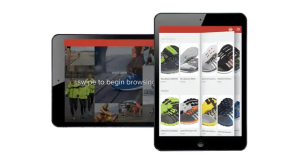
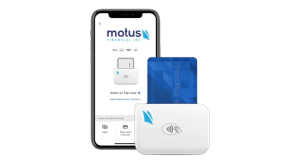
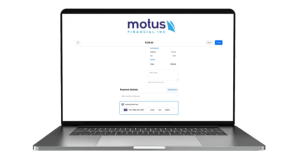
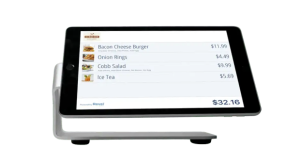 Our POS systems are designed to streamline in-store transactions. With features like inventory management, sales reporting, and customer tracking, our POS solutions help you run your business more efficiently. Our terminals are compatible with various payment methods, including chip cards, contactless payments, and mobile wallets.