

What Is Interchange-Plus Pricing? A Plain-English Guide for Wisconsin Businesses
What Is Interchange-Plus Pricing? A Plain-English Guide for Wisconsin Businesses
Most business owners have no idea what they actually pay to accept a card. They know the monthly number stings, but the statement is a wall of acronyms, and “2.9% plus thirty cents” sounds simple enough to never question. Interchange-plus pricing is the model that makes that number make sense — and for a lot of Wisconsin businesses, it’s also the one that costs less.
Here’s how it works, without the jargon.
Every card fee has three parts
When a customer pays with a card, the fee splits three ways:
- Interchange — the biggest piece. This goes to the bank that issued the customer’s card (Visa, Mastercard, and the rest set the rates). Nobody can change interchange; your processor pays it just like everyone else.
- Assessments — a small, fixed cut the card networks take. Also non-negotiable.
- The processor’s markup — what your provider charges to handle everything. This is the only part that’s actually up for discussion.
The trouble with most pricing models is that they blend all three into one number, so you can never see how big that third piece — the only changeable one — really is.
What “interchange-plus” actually means
Interchange-plus pulls the markup out into the open. You pay the true interchange and assessments (whatever they happen to be for each transaction), plus a clearly stated processor markup — something like “interchange + 0.25% + 10¢.”
That transparency is the whole point. You can see exactly what your provider keeps, which means you can actually compare two quotes instead of guessing.
How it compares to what you’re probably on
Most small businesses are on one of two other models:
- Flat-rate (think the well-known 2.9% + 30¢): dead simple, but you pay the same high rate on a debit card that costs almost nothing to run as you do on a premium rewards card. The processor pockets the difference.
- Tiered pricing: transactions get sorted into “qualified,” “mid-qualified,” and “non-qualified” buckets — and the rules for which is which are vague enough that more of your sales quietly land in the expensive tier.
Interchange-plus skips the games. You pay cost plus a fixed markup, every time.
How to spot it on your statement
Pull a recent statement and look for line items that show interchange charges separately from a stated markup. If instead you see one blended rate, or “qualified/non-qualified” tiers, you’re not on interchange-plus. Our effective rate audit walkthrough shows how to work out what you’re really paying as a percentage of total sales — the single most useful number for comparing providers.
Is it always cheaper?
No — and any processor who says otherwise is selling. For very low-volume businesses with tiny tickets, a flat rate can occasionally come out even or simpler. But for most established Wisconsin businesses doing steady volume, interchange-plus saves money and makes the bill readable. The only way to know for sure is to compare it against your actual numbers. For more ways to trim what you pay, see our practical guide to lowering processing fees.
The short version
Interchange-plus pricing separates the fees nobody can change from the markup your provider chooses. That visibility is the advantage. If you’ve never seen your processing costs broken out this way, that’s usually a sign there’s room to do better.
Want to see how your current rate stacks up? Send us a statement for a free review.





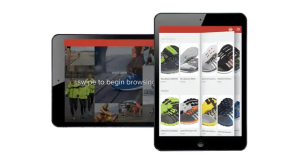
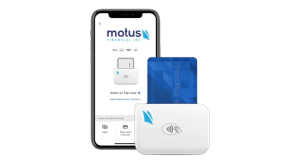
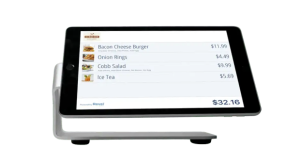 Our POS systems are designed to streamline in-store transactions. With features like inventory management, sales reporting, and customer tracking, our POS solutions help you run your business more efficiently. Our terminals are compatible with various payment methods, including chip cards, contactless payments, and mobile wallets.