

Credit Card Processing Fees in Wisconsin: A Plain-English Guide for Small Business Owners
Credit Card Processing Fees in Wisconsin: A Plain-English Guide for Small Business Owners
If you’ve ever opened your monthly merchant statement, stared at three pages of line items, and closed it again — you’re in good company. Processing statements are famously hard to read, and that’s not entirely an accident. The harder a statement is to understand, the harder it is to comparison shop.
This guide breaks down where credit card processing fees actually come from, which parts are negotiable and which aren’t, and the specific places extra costs tend to hide. No jargon, no sales pitch — just the working knowledge every Wisconsin business owner should have before signing (or renewing) a processing agreement.
The Three Layers of Every Processing Fee
Every time a customer taps, dips, or swipes a card at your business, the fee you pay is really three separate fees bundled together. Understanding the layers is the key to understanding everything else.
Layer 1: Interchange — set by the card-issuing banks
Interchange is the portion that goes to the bank that issued your customer’s card. The card networks publish these rates, and they vary based on the type of card (a basic debit card costs less to accept than a premium rewards card), how the payment is taken (in-person is generally cheaper than keyed-in or online), and your industry. If you want to see how much card type alone can move your costs, we cover it in how different credit card types impact merchant processing costs.
Here’s the part that matters: interchange is the same for every processor. No provider gets a better interchange deal than another. Anyone who implies otherwise is being creative with the truth.
Layer 2: Assessments — set by the card networks
The card networks charge their own smaller fee on every transaction. Like interchange, these are fixed costs that every processor pays equally. They’re the toll for using the network’s rails.
Layer 3: The processor’s markup — the only negotiable layer
Everything above interchange and assessments is your processor’s margin. This is where processors compete, where pricing models differ, and where the entire negotiation actually lives. When you compare providers, you’re only ever comparing this layer — the rest is identical everywhere.
How Processors Package Those Layers: The Common Pricing Models
Interchange-plus pricing passes the true interchange and assessment costs through to you transparently, then adds a clearly stated markup on top. You can see exactly what the processor earns. It’s the model most favored by businesses that want transparency.
Flat-rate pricing charges one blended rate on every transaction regardless of card type. It’s simple to understand, but the simplicity has a price: the flat rate is set high enough to cover the most expensive card types, which means you typically overpay on the cheaper ones — like basic debit cards, which make up a lot of everyday Wisconsin transactions.
Tiered pricing sorts transactions into buckets — often labeled “qualified,” “mid-qualified,” and “non-qualified” — with different rates for each. The catch is that the processor decides which bucket each transaction lands in, and the definitions favor the processor. Tiered statements are consistently the hardest to audit, and this model is where surprise costs most often live.
We compare the first two models in depth in our companion post on interchange-plus vs. flat-rate pricing. [LINK TO POST 4 ONCE LIVE]
Where the Hidden Fees Hide
Beyond the per-transaction rate, statements often carry additional charges. Some are legitimate; some exist mainly because most owners never question them. When you review your statement, look for:
- Monthly and annual account fees — sometimes labeled as statement fees, service fees, or membership fees
- PCI compliance and PCI non-compliance fees — one is a charge for compliance support; the other is a penalty for not completing an annual questionnaire that many merchants don’t know exists
- Batch fees — charged each time your day’s transactions settle
- Gateway fees — for online or keyed-in transactions
- Equipment leases — long-term terminal leases can quietly cost many times what the hardware is worth to buy outright
- Early termination clauses — not a monthly fee, but the cost that keeps you from leaving when the monthly fees pile up
- Padding on pass-through costs — some processors quietly add margin to interchange or assessment line items while presenting them as pure pass-throughs
None of these is inherently a red flag on its own. A statement where several appear together, with vague labels, is worth a second opinion. If you’d like a few concrete moves to trim what you’re paying, start with 5 easy ways to reduce your merchant services fees.
Why “Wisconsin” Matters in This Conversation
Processing costs aren’t location-based the way rent or utilities are — a card network doesn’t charge more in Green Bay than in Milwaukee. But who you work with is very much a local question.
Wisconsin small businesses — restaurants, salons, retail shops, contractors, professional offices — are exactly the merchants that national processors profile as unlikely to scrutinize a statement. A local provider flips that dynamic. When your processor is based in your state, reachable by phone, and dependent on local reputation, the incentive to bury fees mostly disappears. Reputation is the enforcement mechanism, and in a state like Wisconsin, word travels. (Here’s why a local merchant services provider matters.)
Five Questions to Ask Before You Sign (or Renew)
- “Is this interchange-plus, flat-rate, or tiered pricing?” If the rep can’t answer in one sentence, that tells you something.
- “What is your markup, separate from interchange and assessments?” The negotiable layer should be stated plainly.
- “What monthly, annual, and PCI fees will appear on my statement?” Ask for every recurring line item in writing.
- “Is there a contract term, auto-renewal, or early termination provision?” Get the exit terms before you need them.
- “Will you review my current statement with me, line by line?” A provider confident in their pricing welcomes this. One who deflects is telling you where they make their money.
The Fastest Way to Know What You’re Really Paying
You don’t have to become a statement expert — you just need someone on your side who already is. Motus Financial offers Wisconsin business owners a free, no-obligation statement review: bring us a recent merchant statement, and we’ll walk you through every line — what’s interchange, what’s network cost, what’s markup, and what’s padding. If your current setup is genuinely fair, we’ll tell you that too. Curious what your true rate works out to? See how an effective rate audit works.
Frequently Asked Questions
Why did my processing fees go up without notice?
Card networks adjust interchange periodically, and processors sometimes raise their markup at the same time — letting the network changes provide cover. Notices are often buried in statement fine print. A line-by-line review can separate genuine network changes from quiet markup increases.
Are processing fees negotiable?
The processor’s markup — pricing model, monthly fees, and equipment costs — is absolutely negotiable. Interchange and network assessments are not; they’re the same for everyone.
Is it legal to pass processing fees to customers with a surcharge in Wisconsin?
Surcharging rules involve card network requirements, disclosure rules, and legal considerations that change over time, so this deserves a current, situation-specific answer rather than a blanket one. Our guide to cash discount vs. surcharge vs. dual pricing in Wisconsin breaks down the options — and it’s worth talking to your processor before implementing any surcharge program.
How often should I review my merchant statement?
Glance monthly, review deeply at least once a year — and always before an auto-renewal date. Fees tend to drift upward over time in ways that a single month never reveals.
Want a Straight Answer on What You’re Paying?
Send us a recent statement for a free line-by-line review from a local Wisconsin team. No pressure, no obligation — just clarity.
Motus Financial provides merchant services in Wisconsin — transparent pricing and local support for businesses statewide.






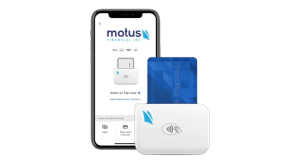
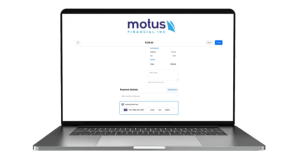
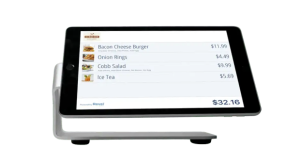 Our POS systems are designed to streamline in-store transactions. With features like inventory management, sales reporting, and customer tracking, our POS solutions help you run your business more efficiently. Our terminals are compatible with various payment methods, including chip cards, contactless payments, and mobile wallets.