

What a Dedicated Account Manager Actually Does (And Why It Matters When Things Go Wrong)
What a Dedicated Account Manager Actually Does (And Why It Matters When Things Go Wrong)
Picture this: it’s a Friday evening, your dining room is packed, and your card terminal just stopped working. You call your processor. You’re on hold for eleven minutes, then connected to someone who has never heard of you and needs five minutes just to find your account. Your local merchant services provider in Madison should never leave you in that situation — but most of them do.
This isn’t a rare horror story. It’s what happens when a business signs up with a national processor that treats merchant support as a cost center rather than an actual service. The fix isn’t complicated. It’s having a real person assigned to your account who already knows your setup before you ever need to call them.
Here’s what that actually looks like in practice.
Most “Support” Doesn’t Know You Exist
National processors move volume. That’s their business. When you’re one of fifty thousand merchants on a platform, personalized attention isn’t part of the model — it’s an exception that happens when you escalate loudly enough.
Every call starts over. You explain your business. You explain your equipment. You explain what happened. Then you get a ticket number and a timeline measured in business days.
A dedicated account manager at a local merchant services provider in Madison flips that entirely. They’ve been to your location. They know your setup. When something goes sideways, the conversation starts at the problem, not at “can I get your merchant ID.”
What Your Local Merchant Services Provider Should Be Doing for You
A lot of companies use the phrase “dedicated account manager” on their website and then route you to a shared inbox. So let’s be specific about what genuine account management actually involves.
Catching Rate Changes Before You Do
Card network fees aren’t static. The Federal Reserve’s annual payments study tracks how interchange rates and assessment fees shift across transaction types and card categories — and they do shift, often in ways that aren’t communicated clearly to merchants. A rate that made sense when you signed your agreement may not reflect what you’re actually paying today.
Your account manager should be reviewing your statements with that in mind. Not because you flagged something, but because it’s part of what they do. Most merchants never notice rate creep until a local provider sits down with them and shows them side by side what they were paying versus what they’re paying now. That conversation happens a lot at Motus Financial.
Being Available When Your Business Actually Needs Them
This sounds obvious. It isn’t. “Available” means something different when your busiest hours are evenings and weekends and your processor’s support team works Monday through Friday, 9 to 5, in a timezone two hours ahead of you.
A local contact who you can actually reach — or who calls you back within the hour — is a fundamentally different experience than a ticketing system. It’s one of the clearest reasons business owners in this area move toward a local merchant services provider rather than staying with a national brand.
Getting the Setup Right the First Time
Bad configuration causes more ongoing processing headaches than most people realize. Wrong pricing model for your transaction mix. Hardware that works fine for retail but creates friction in a restaurant environment. No plan for what happens when you want to add online payments or a second location.
These aren’t hypothetical problems. They show up months later as unexplained fees, slower reconciliation, or a system that doesn’t fit how the business actually runs. Getting the right solution in place from the beginning — based on a real conversation about how you operate — is one of the highest-value things an account manager does, even if you never think about it again once it’s done.
Making Your Statement Make Sense
Merchant statements are intentionally dense. Multiple fee categories, interchange codes, assessment line items, batch fees — most of it is technically disclosed but practically unreadable. A lot of processors count on that.
Your account manager should be able to sit down with your statement and translate it. Not just explain what each line means in the abstract, but tell you whether what you’re paying is reasonable for your volume and business type, and flag anything that looks off. The support team at Motus does this regularly with clients who’ve never had anyone walk them through their own numbers before.
Going to Bat for You When Something Goes Wrong
Chargebacks. Settlement disputes. A transaction that got flagged incorrectly. These situations don’t resolve themselves, and “submit a ticket” isn’t a real answer when money is sitting in limbo.
An account manager with actual relationships inside the processing chain can escalate, follow up directly, and get things moving in ways you can’t from the outside. That’s not a minor convenience — it’s the difference between a dispute that gets resolved in two days and one that drags on for three weeks. You can see what clients say about that kind of support on the Motus testimonials page.
The Pricing Conversation People Get Wrong
Rate shopping makes sense up to a point. But merchants who’ve been through a few processors tend to come back to the same observation: the savings from a marginally lower rate can evaporate quickly when you factor in the time spent dealing with problems, the money lost in unresolved disputes, and the cost of a system that wasn’t set up right.
The real expense of a bad processor rarely shows up on your rate sheet. It shows up on a Saturday night when nobody answers the phone.
A good local merchant services provider in Madison — one that actually delivers on the account manager model — gives you something that fee comparisons can’t capture. Stability. Consistency. A payment system you don’t have to think about because someone else is keeping an eye on it.
That matters more at certain moments than others. Adding staff, opening a second location, moving into online sales — these transitions go smoothly with a partner helping you navigate them, and they get complicated without one. The benefits of working with a provider who’s done it before show up most clearly in exactly those moments.
Questions Worth Asking Before You Choose Anyone
Before signing with any provider, local or otherwise, three questions are worth pushing on directly.
Who exactly will be my point of contact — a name, a direct number, someone consistent — or will I be routed to whoever picks up?
How much experience do you have with businesses in my specific industry, and would any of your current clients be willing to talk to me?
If something breaks on a Sunday afternoon, what does support actually look like?
That third question is the one most people forget until they need the answer.
Frequently Asked Questions
What does a dedicated account manager do that regular support doesn’t?
Regular support starts fresh every time you call — they don’t know your setup, your history, or your business. A dedicated account manager already has that context. They’re tracking your account proactively, not just reacting when you have a problem. The difference is most visible when something goes wrong and you need it fixed fast.
Is a local merchant services provider actually better than a national processor?
For a lot of small businesses, yes — but “local” alone isn’t the differentiator. What matters is whether you get a real assigned contact, responsive support, and someone who knows your account before you need to call them. Some national processors have good support; many don’t. The advantage of a local provider is that accountability is harder to hide when they’re in the same community.
How do I find out if I’m overpaying on my current processing?
Pull your last three statements and look at your effective rate — total fees divided by total volume processed. If that number is consistently above 3% and you’re mostly running in-person transactions, it’s worth having someone review it. A local provider can do that for free and tell you plainly what they find.
What’s interchange-plus pricing and why does it matter?
Interchange-plus separates the base interchange rate (set by Visa or Mastercard) from the processor’s markup, so you can see exactly what you’re paying for each. Tiered pricing bundles fees together in a way that’s harder to evaluate. Most small businesses do better on interchange-plus — though the right model depends on your transaction mix and average ticket.
When does it make sense to switch processors mid-contract?
That depends entirely on your early termination fee and what you’re currently paying. Sometimes the savings from switching immediately outweigh the exit cost. Other times it makes more sense to wait. A local provider can look at your contract and do the math with you — no commitment required.
Let’s Take a Look at What You’re Actually Paying
If you’ve been running your business without a real point of contact at your processor — or you’ve been meaning to look at your rates and just haven’t gotten around to it — a conversation with a local merchant services provider in Madison is a low-effort way to find out where you stand.
Motus Financial has worked with businesses in Sun Prairie, Madison, and the surrounding area for over 20 years. Bring your last statement. We’ll tell you exactly what we see.
Start the conversation here — no pressure, just answers.







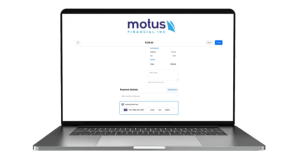
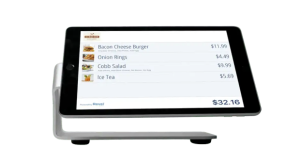 Our POS systems are designed to streamline in-store transactions. With features like inventory management, sales reporting, and customer tracking, our POS solutions help you run your business more efficiently. Our terminals are compatible with various payment methods, including chip cards, contactless payments, and mobile wallets.