

Credit Card Processing Sun Prairie WI: How to Know If You’re Overpaying Right Now
Credit Card Processing Sun Prairie WI: How to Know If You’re Overpaying Right Now
Credit card processing Sun Prairie WI business owners rely on has one persistent problem — most of the people paying for it have no idea whether they’re getting a fair deal. Not because they don’t care, but because merchant statements are deliberately dense, rates shift quietly, and processors have little reason to volunteer the information that would save you money.
This post breaks down what to look for, what the numbers should actually look like, and what to do when the answer isn’t good.
Why This Comes Up More Than It Should
Sun Prairie has grown significantly over the last decade. A lot of local businesses are still running on the processing setup they signed up with when they opened — which made sense at the time but may look very different compared to what’s available today.
Nationally, U.S. merchants paid over $160 billion in card acceptance costs in a recent year according to the Nilson Report, and that number climbs annually as card usage increases and processors add fees in ways that aren’t always obvious. A business processing $30,000 a month at an effective rate of 3.3% when it should be closer to 2.1% is losing roughly $3,600 per year. That’s real money sitting with your processor instead of in your account.
Credit Card Processing Sun Prairie WI: Understanding How Your Rate Is Built
Before you can judge whether your rate is reasonable, you need to know what kind of pricing structure you’re on. There are three main models.
Tiered Pricing
The most common — and the hardest to evaluate honestly. Your transactions get sorted into qualified, mid-qualified, and non-qualified buckets, each priced differently. The catch is that processors set those categories themselves. A customer pays with a rewards card? Non-qualified. You key in a number instead of swiping? Mid-qualified. The buckets are vague by design, and your actual cost ends up higher than whatever headline rate you were sold on.
Many Sun Prairie businesses are on tiered pricing without knowing it.
Flat Rate
Processors like Square and Stripe charge one flat percentage regardless of card type. Simple to understand, but rarely the cheapest option once your monthly volume gets above $10,000 or so.
Interchange-Plus
This model separates the base interchange rate — set by Visa and Mastercard, not negotiable — from the processor’s markup, which very much is. You can see exactly what you’re paying for and why. For most established businesses, this is the most transparent and cost-effective structure available. It’s the model Motus Financial builds client accounts around.
7 Signs Your Credit Card Processing Sun Prairie WI Is Too Expensive
Pull up a recent statement and check each of these.
1. Your Effective Rate Is Above 3%
Add up every fee on the statement — every line item — and divide by your total card volume. If you’re running mostly in-person chip and tap transactions and that number is above 3%, the processor’s markup is doing a lot of heavy lifting. In-person transactions carry the lowest interchange rates. A high effective rate on top of that points to a pricing problem, not a card mix problem.
2. You’re on Tiered Pricing
If your statement shows qualified, mid-qualified, and non-qualified categories, that’s tiered pricing. Ask your processor exactly what determines which tier a transaction lands in. If the answer is vague or they redirect the conversation, that’s your answer.
3. You’re Paying a Monthly Minimum
Some agreements include a monthly minimum fee — if your processing fees don’t hit a set threshold, you pay the difference anyway. For slower months, this inflates your true cost significantly. Worth finding in your contract if you haven’t already.
4. Your Rates Have Crept Up Since You Started
Card network interchange rates adjust periodically, and legitimate processors pass those through. But some processors also quietly increase their own markup with minimal notice buried in contract language. If you haven’t compared your current statement to what you were originally quoted, do it now. The Madison merchant services page at Motus has more on what straightforward pricing actually looks like.
5. Per-Transaction Fees Are Eating Into Small-Ticket Sales
A 2.5% rate sounds reasonable until you add $0.25 per transaction on a $12 average ticket. At that point your real cost on small sales is much higher than the percentage alone suggests. Run the math for your actual average ticket size, not just the percentage rate.
6. There Are Fees on Your Statement You Cannot Identify
PCI compliance fees, statement fees, batch fees, gateway fees — some of these are standard, some are padding. If there are line items you genuinely cannot explain, that’s worth a direct conversation. A review of common merchant fee structures can help you figure out what’s normal and what isn’t.
7. Nobody Has Reviewed Your Account in Over Two Years
Processors don’t proactively offer you better pricing. They charge what they charge until someone pushes back. If your last real review was when you signed up, there’s a genuine chance your rates no longer reflect what’s competitive in the current market.
What to Do About It
Identifying the problem is step one. Here’s what step two actually looks like.
Gather Three Months of Statements
A single month can be misleading depending on volume fluctuations. Three months gives you a reliable picture of your real effective rate and fee pattern.
Calculate Your True Effective Rate
Total fees divided by total volume, averaged across three months. That number is the only honest measure of what you’re paying. Compare it to what you were originally told you’d pay.
Get a Free Statement Review From a Local Provider
A local credit card processing provider in Sun Prairie can look at your statement at no cost and tell you plainly what they find. Not a sales pitch — an actual breakdown of your current rate, what’s driving it, and whether there’s a better option. You can start that process with Motus here without any commitment.
The Sun Prairie POS and processing page gives you additional context on what local businesses in the area are typically running.
Know What Switching Actually Involves
If the review shows you’re significantly overpaying, the next question is whether moving now makes financial sense or whether you’re better off waiting for your contract to expire. That depends entirely on your early termination fee. A local provider can look at your contract terms, do the math, and give you a straight answer. Sometimes the savings clearly justify switching immediately. Other times you wait six months and lock in better terms at renewal.
What a Real Improvement Looks Like in Dollar Terms
A Sun Prairie restaurant doing $40,000 a month in card volume at an effective rate of 3.3% pays $1,320 in processing fees monthly. At 2.2% on interchange-plus, that drops to $880. The difference is $440 per month — $5,280 over a full year.
That’s not an optimistic projection. It’s a fairly typical outcome for a business that’s been on tiered pricing for a few years with no review.
Your numbers will depend on your business type, card mix, and transaction volume. But without a review, you’re guessing. With one, you know exactly where you stand.
Frequently Asked Questions
How do I calculate my effective credit card processing rate? Add up every fee on your monthly statement — percentage fees, per-transaction fees, monthly minimums, PCI fees, everything — then divide that total by your total card volume for the month. That percentage is your effective rate. It’s the only number that reflects what you’re actually paying, not what you were quoted.
What is a fair effective rate for a small business in Sun Prairie? It varies by business type and transaction mix. Most retail and restaurant businesses running primarily in-person chip and tap transactions land between 1.8% and 2.5% on interchange-plus pricing. Above 3% on that kind of volume is worth questioning.
Can I switch processors before my contract ends? Yes, but check your early termination clause first. Some contracts have a flat exit fee, others calculate it based on remaining months. Compare that number against the monthly savings from switching and you’ll know quickly whether it makes sense to move now or wait.
Why does my processing rate change even if I don’t renegotiate? Two reasons. Card network interchange rates adjust periodically — typically twice a year — and flow through to your statement. Separately, some processors have contract language allowing them to adjust their own markup with limited advance notice. Reading your original agreement will tell you what they’re allowed to do unilaterally.
Is a free statement review actually free? At Motus Financial, yes. There’s no fee and no obligation. We look at your statement, tell you what we see, and give you an honest comparison. If your current setup is already competitive, we’ll tell you that. If it isn’t, we’ll show you the numbers.
Find Out Where You Actually Stand
If you’re running a business in Sun Prairie and your credit card processing hasn’t been reviewed in the last couple of years, thirty minutes with a local provider is the fastest way to get a real answer.
Motus Financial is based right here in Sun Prairie. We do free statement reviews with no pressure and no commitment — just a clear look at what you’re paying and whether there’s a better option waiting.







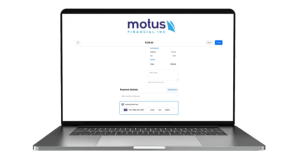
 Our POS systems are designed to streamline in-store transactions. With features like inventory management, sales reporting, and customer tracking, our POS solutions help you run your business more efficiently. Our terminals are compatible with various payment methods, including chip cards, contactless payments, and mobile wallets.