
Payment Processing for Wisconsin Dental Offices
Payment Processing for Wisconsin Dental Offices
Dental practices have specific payment processing requirements that general merchant services providers don’t address well. Patient billing that integrates with practice management software. HSA/FSA card acceptance. Large-ticket out-of-pocket procedures (implants and orthodontic treatment often cost several thousand dollars). Insurance payment reconciliation.
Motus Financial works with Wisconsin dental practices to set up processing that fits the unique billing environment of a dental office. Not the same setup as a restaurant or retail store.
Call 608-819-8666 for a free statement review.
Payment Processing Needs Specific to Dental Practices
- HSA and FSA card acceptance. Patients paying with health savings accounts need a processor configured to accept these cards (the account should be coded as a health care merchant).
- Large out-of-pocket transactions. Implants and orthodontic treatment often cost several thousand dollars, and the type of card a patient uses changes what the charge costs to accept.
- Practice management software integration. Dentrix, Eaglesoft, Carestream, Curve Dental, and others.
- Virtual terminal. For taking payment over the phone or processing patient balance invoices.
- Recurring billing. For patients on extended payment plans, especially common for ortho and implants.
- ACH option. For larger patient balances. ACH bank transfers usually cost the practice less than card payments.
- Clear, reconcilable statements. For accurate practice bookkeeping.
HSA and FSA Card Processing for Dental
Health savings account (HSA) and flexible spending account (FSA) cards look like regular Visa or Mastercard but have specific eligibility requirements at the point of sale. Many FSA and HRA cards, and some HSA cards, only work at merchants coded as health care providers, so a dental office should be coded as MCC 8021 (Dentists and Orthodontists).
Without proper MCC registration:
- HSA/FSA cards may be declined at checkout
- Transactions may process incorrectly
- You lose the patient’s ability to pay immediately
With proper registration (Motus Financial handles this):
- HSA/FSA cards process smoothly
- Patients can use pre-tax healthcare funds
- Your practice gets paid in full without delay
This is a simple configuration, but it matters for patient experience.
Large-Ticket Dental Invoices and Interchange Optimization
The interchange rate depends mainly on the card type. A premium rewards credit card costs more to accept than a debit card, and Visa has separate healthcare rates for card charges of $500 or more.
Example Visa interchange rates (card present, October 2026):
- Visa debit from large banks: ~0.05% + $0.22
- Visa credit, healthcare charges of $500 or more: ~1.43% + $0.05
- Visa Signature Preferred and Infinite, healthcare charges of $500 or more: ~2.30% + $0.10
On a $5,000 implant case paid with a premium rewards card:
- Visa interchange alone: about $115 ($5,000 x 2.30% + $0.10)
- Under the tiered example below (non-qualified, 3.49% + $0.10): about $175 total in fees
- With interchange-plus pricing: Visa’s cost plus network fees and a disclosed markup, with no non-qualified surcharge
Motus Financial brings specific experience with healthcare payment processing from 20 years at major processors. Healthcare practices (dental, medical, veterinary) process in a different environment than retail or food service. Making sure your account is set up correctly (MCC code, large-transaction tier optimization, HSA/FSA configuration) is part of what Motus Financial does.
Practice Management Software Integration
Modern dental PMS platforms have payment integration capability, but most practices aren’t using it optimally. Integration means:
- Automated posting. Payment automatically records in patient ledger after processing.
- No reconciliation hassle. You don’t manually match payments to invoices.
- Recurring billing automation. Payment plans process without manual entry.
- Report accuracy. Aging reports, account balances, and collections data stay current.
Motus Financial works with your current PMS to set up the cleanest integration path. Most practices can integrate within days of signing up.
Transparent Pricing for Dental Practices
Dental practices often end up with tiered pricing from their bank or their PMS’s bundled payment processor. This is typically more expensive than interchange-plus pricing, especially for large out-of-pocket procedures where patients tend to use rewards and premium cards.
Tiered pricing example (for illustration only; rates vary by provider):
- Qualified: 1.79% + $0.10 (rare in dental, mostly debit)
- Mid-qualified: 2.29% + $0.10 (most transactions land here)
- Non-qualified: 3.49% + $0.10 (large elective procedures with rewards cards)
Most dental practices’ transactions fall into mid-qualified or non-qualified buckets, making the effective rate 2.8% to 3.2%.
Interchange-plus pricing (Motus Financial): You see exactly what Visa and Mastercard charge for each transaction type, plus Motus’s flat fee. No blended buckets. No non-qualified surcharges on your crown and implant payments.
Typical Motus effective rate for dental: 1.9% to 2.3%, depending on transaction mix.
Tiered vs. Interchange-Plus: Side-by-Side
Pricing Model | $5,000 Implant Fee | Effective Rate | Annual Cost (at $50K/mo volume) |
|---|---|---|---|
| Tiered (typical bank) | About $175 (non-qualified) | 2.8% to 3.2% | $16,800 to $19,200 |
| Interchange-Plus (Motus) | Visa cost + disclosed markup | 1.9% to 2.3% | $11,400 to $13,800 |
| Annual savings | Varies by card type | 0.5% to 1.3% | $3,000 to $7,800 |
Patient Data and Payment Security
Card payment processing is largely outside HIPAA under section 1179, so a processor does not need a business associate agreement just to run card payments. Your practice still owns its HIPAA duties, and patient health details stay out of the payment system:
- PCI-DSS Level 1 certification
- Encrypted patient data transmission
- No patient health data storage in payment systems
- Audit trails for compliance verification
Serving Wisconsin Dental Practices
Motus Financial works with dental offices throughout Wisconsin, including Madison, Milwaukee, Green Bay, Appleton, Eau Claire, Kenosha, Racine, Waukesha, Oshkosh, La Crosse, Wausau, and the Sun Prairie/Madison metro area. Whether you’re a single-provider practice or a multi-location group, the processing setup that fits dental billing is the same.
Our office: 100 Wilburn Road, Suite 209, Sun Prairie, WI 53590.
Free Statement Review for Wisconsin Dental Practices
Show us your current processing statement. We’ll calculate your effective rate, identify where the fees are going, and tell you what you’d pay with Motus Financial at transparent interchange-plus pricing.
What to send us:
- Your most recent merchant processing statement (any month)
- Optional: Your annual processing volume estimate
What we’ll deliver:
- Your effective rate calculation (% and dollars)
- Breakdown of where fees are being charged
- What the same transactions would cost with Motus Financial
- Estimated annual savings (if switching makes sense)
- No obligation. This is truly free, no strings.
Most Wisconsin dental practices we review are paying 0.4% to 1.0% more than they need to. On $50,000 per month in processing volume, that’s $2,400 to $6,000 per year in unnecessary fees.
Phone: 608-819-8666
Address: 100 Wilburn Road, Suite 209, Sun Prairie, WI 53590
Website: motuscc.com
Frequently Asked Questions: Dental Office Payment Processing
Q: What is MCC 8021?
A: MCC 8021 is the card network code for dentists and orthodontists. Your processor assigns it to your merchant account. Many FSA and HRA cards, and some HSA cards, only work at merchants coded as health care providers, so the wrong code can cause these cards to be declined at checkout.
Q: Does my dental practice need a special merchant account for HSA/FSA cards?
A: Not a completely separate account, but your existing account should be coded as a dental office (MCC 8021) so health account cards are not declined. Motus Financial confirms this is set up correctly during onboarding. Many dental practices realize mid-processing that their account isn’t registered correctly and have been declining eligible HSA/FSA transactions.
Q: How much does dental payment processing cost in Wisconsin?
A: With tiered pricing (typical from banks and bundled PMS processors), most Wisconsin dental practices pay an effective rate of 2.8% to 3.2%. With interchange-plus pricing through Motus Financial, the typical effective rate is 1.9% to 2.3%, depending on transaction mix. At $50,000 a month, each 0.1% difference in effective rate is about $600 a year.
Q: Can Motus Financial integrate with my Dentrix or Eaglesoft software?
A: We’ll assess your specific practice management software during consultation. Dentrix, Eaglesoft, and Carestream all have payment integration options. We’ll confirm compatibility and map out the cleanest path to reconcilable payment processing.
Q: How do large dental invoices affect my processing rates?
A: Large transactions on premium rewards cards (very common for cosmetic and implant procedures) tend to hit higher interchange tiers with tiered pricing. With interchange-plus pricing at Motus Financial, you see exactly what the card network charges for each transaction type. On a $5,000 procedure, your cost is Visa’s published rate plus network fees and a disclosed markup, with no non-qualified surcharge. We can also discuss ACH as a lower-cost alternative for patients paying large out-of-pocket balances (if they have a bank account).
Q: Do you handle payment plans and recurring billing?
A: Yes. Motus Financial supports recurring billing for orthodontic treatment plans, extended implant financing, and other multi-payment patient arrangements. Your PMS typically triggers the recurring transaction, and we process it according to the schedule.
Q: What happens if a patient’s HSA/FSA card gets declined?
A: If your account is coded as a dental office, most health account cards should work for eligible expenses. Preventive care, fillings, braces, dentures and other treatment for dental disease generally qualify. Purely cosmetic work, such as teeth whitening, generally does not. If a card is still declined, the cause is usually on the patient’s side: not enough funds, or the plan does not cover that service. The patient’s plan administrator can confirm, and Motus Financial will help you troubleshoot.
Q: Can we offer payment plans with no interest?
A: Dental practices can offer internal payment plans (no-interest, direct-to-practice) or work with third-party financing partners. Motus Financial handles the processing side. If you’re using CareCredit or other patient financing platforms, we integrate with those as well.





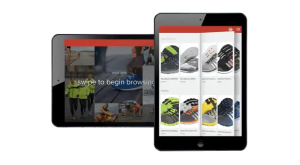
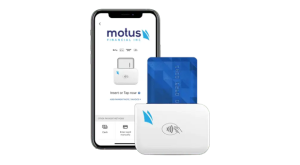
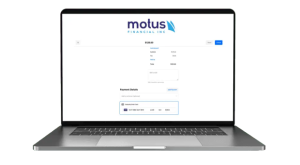
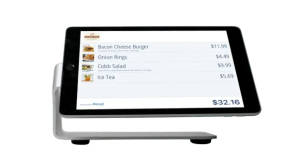 Our POS systems are designed to streamline in-store transactions. With features like inventory management, sales reporting, and customer tracking, our POS solutions help you run your business more efficiently. Our terminals are compatible with various payment methods, including chip cards, contactless payments, and mobile wallets.